Fairy Tales Know What Therapy Forgot

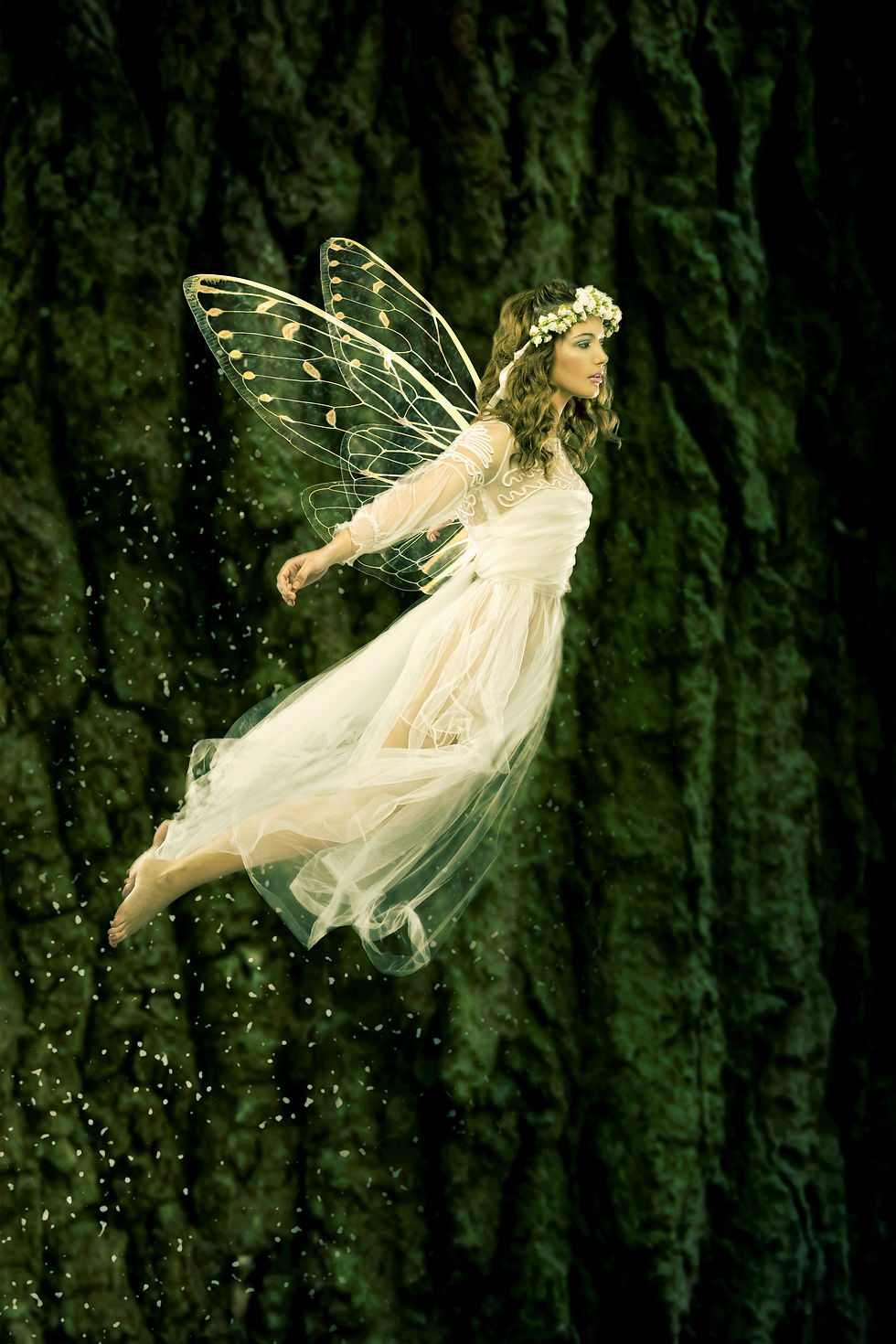
Before there were diagnoses, there were stories.
Before there were treatment plans, there were rituals.
Before there were therapists, there were elders—people who walked into the darkness, found their way through, and came back to guide others.
Your pain is not a modern invention. Your anxiety, your pain, your disconnection, your sense that something is fundamentally wrong—these experiences have been named, storied, and survived for as long as human beings have existed.
You are not a new problem. You are a modern human having an ancient human experience.
The Stories Were Always About You
Every culture across human history has told stories about the descent into darkness. Not because darkness is something to celebrate, but because it is something every human being eventually encounters—and because those who came before us understood that the descent needed a map.
Persephone was dragged into the underworld. Jonah was swallowed by the whale. Inanna was stripped of everything as she descended through the seven gates. A miller's daughter had her hands cut off and retreated to the deep forest. The heroes and heroines of a thousand different stories descend - and not by choice - into darkness, helplessness, and chaos.
These aren't just entertaining narratives. They are maps.
They were told and retold across generations because the people telling them understood something we have largely forgotten: that the journey into darkness is not an aberration. It is a passage. And passages, by their nature, lead somewhere.
The ancient stories were also honest about something we prefer not to say aloud: that

not every passage leads back to ordinary life. Some lead through it—toward the final threshold that waits for all of us. Even there, perhaps especially there, learning to inhabit your body, to feel what is real, to meet yourself without flinching— is not wasted work. Every tradition that ever told these stories also told stories about how to cross that final threshold with dignity, with presence, with the full weight of a life consciously lived.
The stories were always about you. All of you.
Every passage you will ever make.
When you are in the middle of your own darkness—when the anxiety won't lift, when the pain won't resolve, when you feel lost in a forest with no clear path—you are living a story that has been lived before. Not metaphorically. Literally.
The specific texture of your suffering has been named and storied in cultures you've never encountered, by people who died thousands of years before you were born.
They knew you were coming.
What We Lost When We Lost the Stories
Somewhere in the process of becoming modern, we made a trade. We gained extraordinary medical and psychological knowledge. We developed treatments, diagnoses, and frameworks for understanding the human mind and body.
And we lost the stories.
We lost the understanding that suffering is not a malfunction but a passage. We lost the rituals that held people together through their darkness. We lost the elders who had been through the fire and could say with genuine authority: I know this place. I've been here. Follow me.
What we gained in clinical precision, we lost in meaning.
And meaning, it turns out, is not a luxury. It is medicine.
When your pain has no story, no context, no place in a larger human narrative—when it is

simply a set of symptoms to be managed or eliminated so your life looks more like your Instagram feed—it becomes isolating in a way that compounds the suffering itself.
You are not just in pain. You are alone in your pain.
You are uniquely broken in a world of people who seem to be managing just fine.
This isolation is its own wound. And it is, in many ways, a modern invention.
The Other Side of Ancient
Here is what the ancient stories also tell us:
The descent is not the end of the story.
Persephone returns. Jonah emerges. Inanna rises. The handless maiden comes back from the forest, not only with new hands, but changed, deepened, carrying something she couldn't have found any other way.
This is not toxic positivity. It is not a promise that healing will be quick or easy or that you'll emerge without scars.
It is something more honest and more useful: the testimony of everyone who has been where you are and found their way through.
Your pain is ancient. And so is your capacity to meet it.
So is the possibility of finding, on the other side of this descent, something you couldn't have found any other way—a depth of self-knowledge, a quality of compassion, a genuine aliveness that the social media wellness feeds can never offer.
You Were Never Meant to Do This Alone
Your pain is ancient. You are not uniquely broken. The map has always existed.
And you were never meant to find your way through alone.
Your body is already telling the story. It's in the way you breathe—or don't. In the places you hold tension without knowing it. In the symptoms that won't resolve. In the posture that formed itself around old pain. In the tone of your voice and the pace of your speech. In the content of your dreams.
These are not malfunctions. They are a language. An ancient language, older than words,

that your body has been speaking all along.
What I offer is not a map through your darkness—no one can give you that. Your passage is yours alone to make. But I've spent 30+ years learning to read the language the body speaks. To sit with what's emerging without rushing it toward resolution. To recognize the shape of the story you're living—not to tell you what it means, but to help you hear it yourself.
I may not have a direct experience of your individual journey.
I am someone who knows how to listen to what's already trying to find its way through you.
For more like this, read "Face What is Hidden, Find What is Whole".
If something in these words resonates, I offer complimentary phone consultations to explore whether this work might be right for you.
Samantha Leonard is a somatic therapist and yoga therapist with over 30 years of

experience serving the Charlotte and Lake Norman areas. She integrates multiple approaches, including Internal Family Systems, Pain Reprocessing Therapy, Jungian Depth Psychology, and personalized Yoga Therapy to help people heal what talk therapy alone cannot reach. Virtual sessions are available.

Comments